Articles
Read our latest articles and guides.

The Colleague Who Switches For You
The room switches to English before you ask. Nobody resents it. Everybody notices it — and it's the edges of the day that decide how you're read, not the meeting.

Delete the Streak
That number in your phone has never once made you able to speak. It measures attendance, not ability — and it was built so that quitting would feel like loss.

How to Know Your Language Learning Is Actually Working
A 500-day streak means you opened an app 500 times. There is one honest measure of whether language is transferring, and you don't have to remember to take it.

The Boring Answer Is the Right One
The right material, often enough, over enough time, in a way you'll keep doing. That's the whole answer, and it's been the same for decades.

The Trip Is Already Booked
Between now and the date is a fixed number of weeks. Same total effort spread across two months produces automatic phrases; crammed into two, it produces neither.
The Recall Gap
There's a silence in the middle of every line. Every other course removes it — and it's the only part that matches what happens in a real conversation.

In the Room, Not Beside It
You're at the table, smiling, tracking the mood without the content, waiting for someone to translate the last two minutes. In the room, but not in the conversation.

Stop Waiting Until You're Ready to Speak
The readiness bar retreats at exactly the speed you approach it. It was never a knowledge bar — and everything you do while waiting trains the wrong system.
Why Your Native Language Comes First in Every Outputly Song
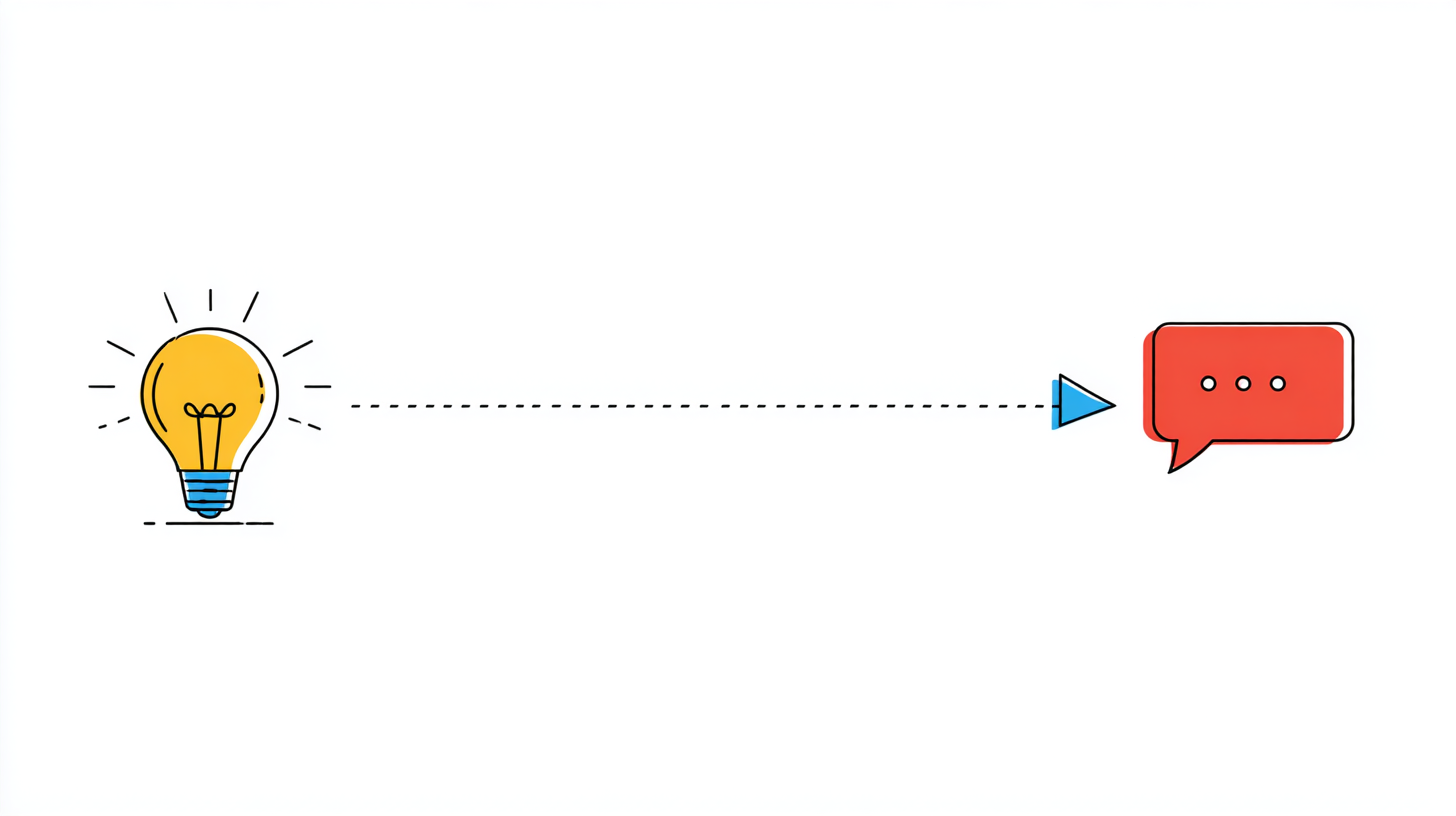
Native language, recall gap, target language. Kroll and Stewart showed the connection is asymmetric — reverse the order and you train recognition instead of speech.

The Songs Everyone There Already Knows
Every country has forty songs everybody knows. Being outside them is one of the quietest ways of being a foreigner — and music travels ahead of the language.