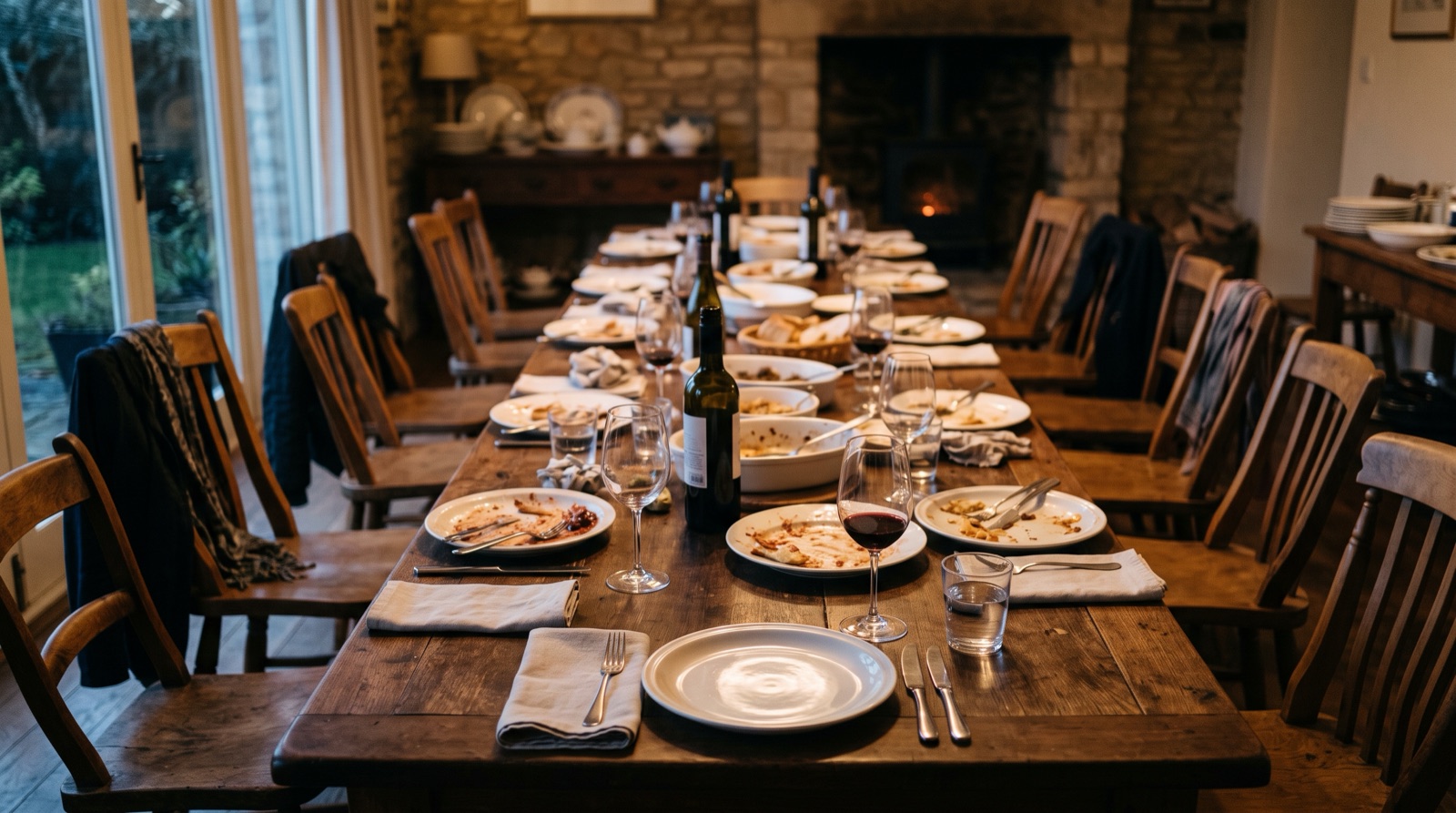
There's a particular experience that happens at family gatherings when you don't share the language.
You're sitting at the table. Everyone is talking. There's laughing, an argument about something, somebody telling a long story with their hands. And you're there, smiling, tracking the mood without any of the content, waiting for somebody to take pity and compress the last two minutes into a sentence.
You're in the room. You're not in the conversation. And everyone at the table can feel the difference.
Translation Isn't Inclusion
Whoever translates for you — usually your partner — is doing something generous, and it doesn't work.
By the time a summary arrives, the moment has passed. You can't respond, because your response would be to something three exchanges ago. You laugh a beat after everybody else. You're a guest being catered for rather than a person in the group — and your partner has spent the evening working instead of enjoying their own family.
Everybody is being kind and nobody is having the evening they wanted.
The Bar Is Lower Than You Think
Here's what surprises people. You don't need to follow everything to change your position at that table.
You need to be able to answer when somebody addresses you directly. To ask a question of your own. To say the small things — pass me that, I'm fine thanks, no really, it's very good, where did you get this.
That's a couple of dozen phrases. And the effect is wildly out of proportion to the effort, because your role changes from a person being accommodated to a person taking part badly. Those are completely different seats.
What It Does to Them
Worth saying plainly: the effort registers.
Somebody's mother watching you attempt her language, badly, at her table, is reading something specific into it — that her family was worth the trouble. That reading is correct, and it lands harder than anything you could have said in your own language, precisely because it obviously cost you something.
People remember who tried. It tends to outlast whether the attempt went well.
Start With the Table, Not the Language
You aren't learning a language in the abstract. You're learning about thirty things that get said at that table, at the speed they get said.
Which is a small, specific, achievable job. And it moves your chair.
About Outputly
Outputly teaches the phrases people actually use, at ordinary speed, in order of how often they come up — so the things said around that table are the first ones you can answer.