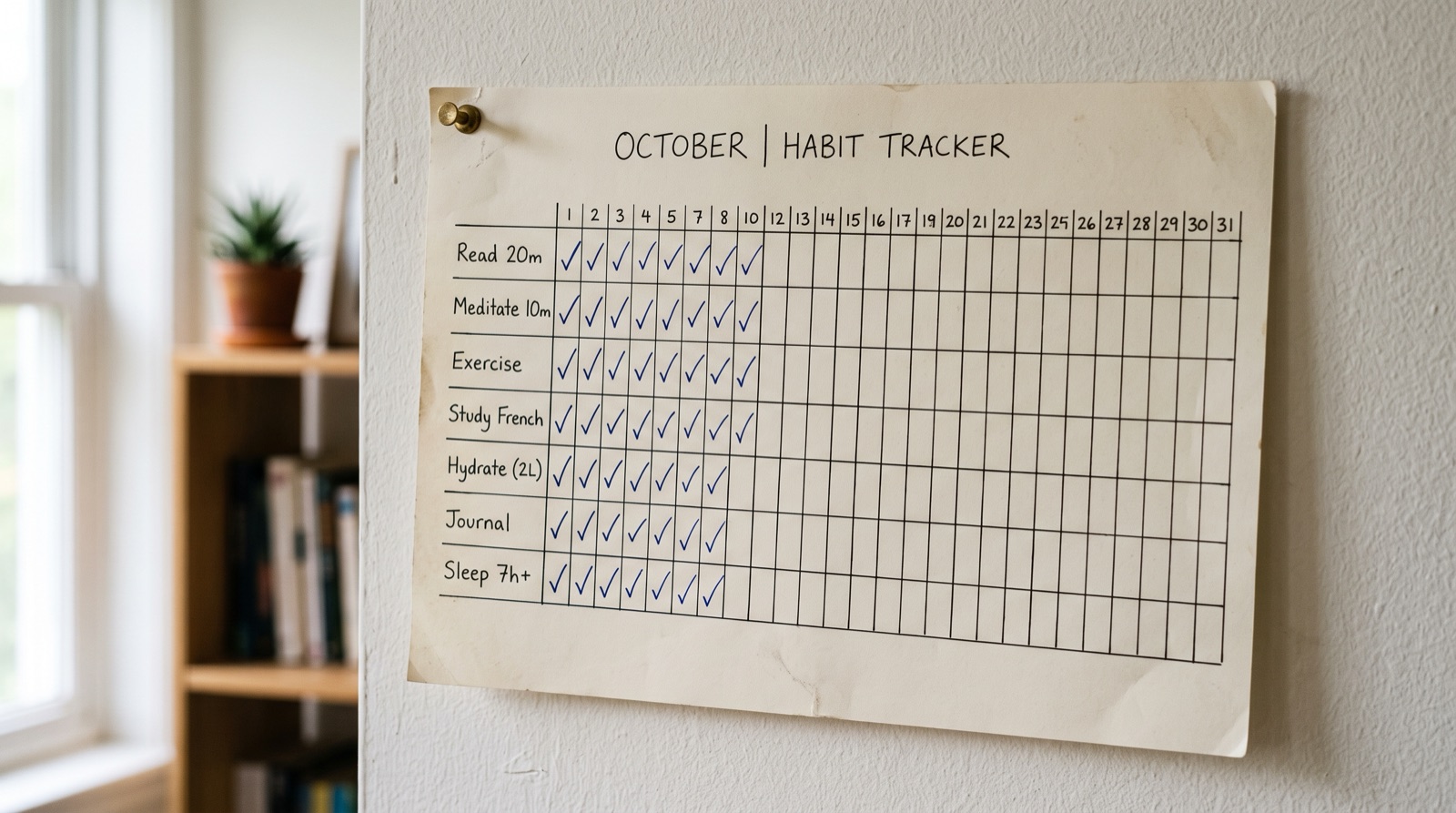
You've read the advice. Build the habit. Stack it onto an existing routine. Set a smaller goal. Use a tracker. Find your why. Be consistent.
You've tried all of it. It worked for about eleven days.
The conclusion everybody draws, including you, is that you lack discipline. That's the wrong conclusion.
The Diagnosis Is Doing Damage
When a method fails there are only two explanations available. Either the person was inadequate or the method was.
The self-improvement industry has an obvious commercial interest in the first one — if the method is fine and you're the problem, you'll be back to buy the next thing. So the language you've absorbed about your own failure is character language. Lazy. Inconsistent. Not committed enough.
You've now applied that verdict to yourself several times, and each time it's made starting again slightly less likely. The diagnosis isn't just wrong. It's costing you.
What Willpower Actually Is
Willpower is what you spend to make yourself do something your brain isn't being rewarded for.
That's the whole definition. An activity that produces its own pull needs none — nobody discusses the discipline required to watch the next episode.
So when a method demands willpower, that isn't a moral fact about you. It's a design fact about the method. It's telling you plainly that your brain is getting nothing back.
And willpower runs out. Every day, without fail, by about the evening — which is precisely when your language app is sitting there waiting.
You Are Not Short of Discipline
Look at what you already do without being made to.
You listen to hours of music a week. You've watched a whole series in a weekend. You've read things nobody set you. You have never once needed a habit tracker for any of it.
That isn't a person with a discipline problem. That's a person whose brain works normally, who keeps being handed activities that give it nothing.
Change the Input, Not Your Character
Stop trying to become somebody who enjoys flashcards. That person doesn't exist and you won't be the first.
Pick something you'd do on a bad day — tired, unmotivated, nobody watching — and check whether language can ride along inside it. If it can, the consistency problem solves itself permanently and you never think about it again.
You don't need fixing. The method does.
About Outputly
Outputly needs no discipline because there's nothing to force yourself to do. You press play on music you'd have played anyway, and the phrases carry on after you've stopped listening.