In 1985, linguist Merrill Swain noticed something that didn't fit Stephen Krashen's theory.
She was studying students in French immersion programmes across Canada. These students had received thousands of hours of comprehensible input. By Krashen's logic, they should have been fluent. Their understanding was excellent — they could follow lessons, read texts, and comprehend native speakers with ease.
But when they spoke, their French was riddled with errors. Their grammar was inconsistent. Their fluency was limited. Despite years of immersion and massive amounts of input, their speaking ability hadn't kept pace with their comprehension.
Swain's conclusion was direct: input alone is not enough. Producing language — output — plays a role in acquisition that input simply cannot fill.
The Output Hypothesis
Swain proposed what she called the Output Hypothesis, and it rested on three key functions that output serves:
The Noticing Function. When you try to produce a sentence in your target language and fail, you notice the gap between what you want to say and what you can say. This noticing doesn't happen during comprehension because you can understand the general meaning without knowing the specific forms. Production forces you to confront what you don't know.
If someone asks you a question in French and you understand it perfectly, your input system is working. But when you try to respond, you might realise you don't know the past tense of a particular verb. That gap — that moment of "I don't know how to say this" — only reveals itself through output.
The Hypothesis Testing Function. When you produce language, you're testing your internal understanding of how the language works. You say something, observe the reaction, and adjust. If you say "je suis allé" and the person responds normally, your hypothesis about that construction is confirmed. If they look confused, you know something was wrong.
Input doesn't provide this feedback loop. You can passively understand a sentence without ever testing whether you could produce it correctly.
The Metalinguistic Function. When you struggle to produce output, you often reflect on language itself — thinking about form, structure, and rules. This conscious reflection helps solidify your understanding in ways that passive comprehension doesn't require.
Why This Matters for Language Learners
The practical implication of Swain's work is significant: if you've been following a comprehensible input approach and your understanding is strong but your speaking is weak, that's not a failure. It's the expected outcome of training only one skill.
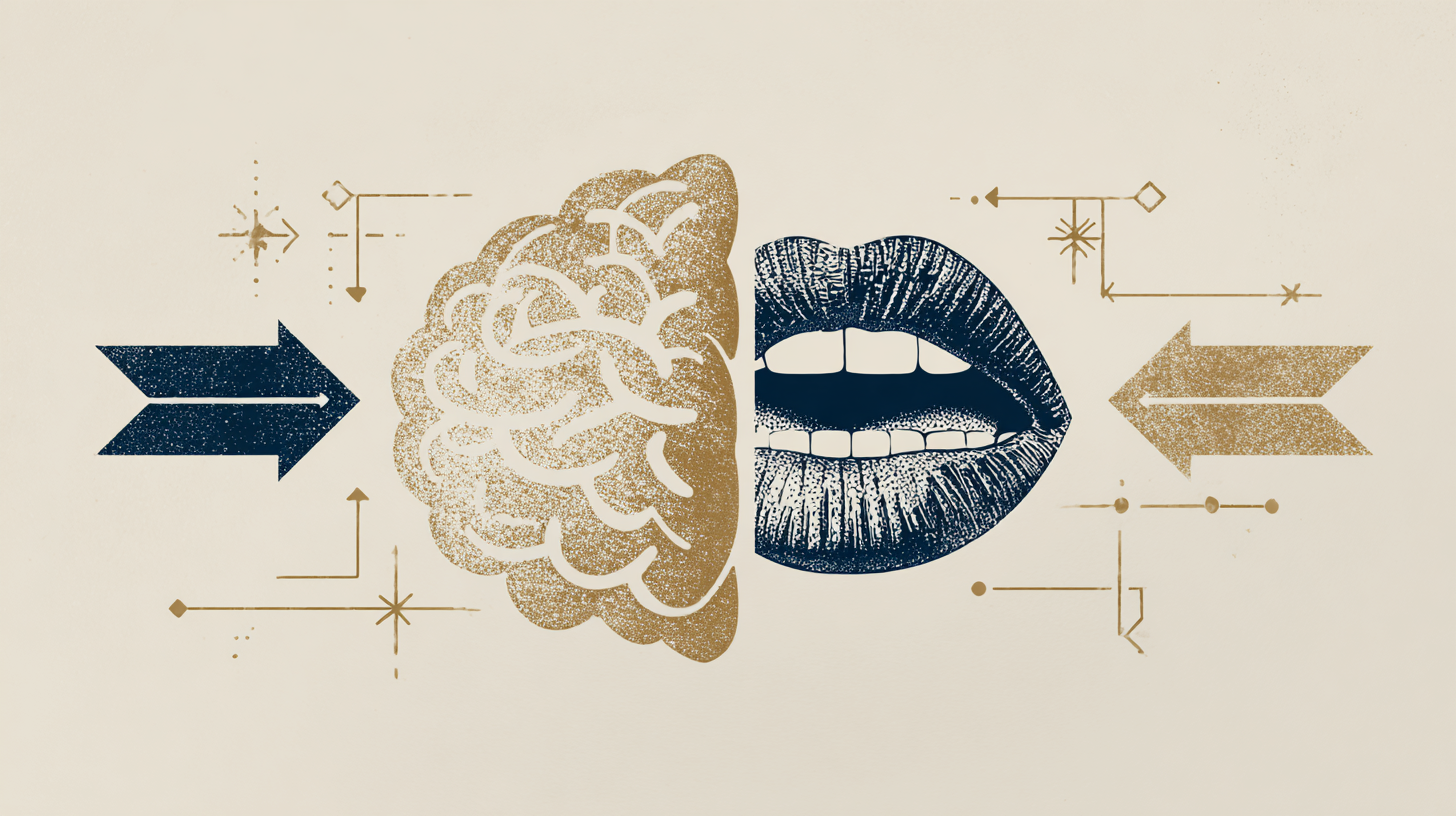
Understanding and speaking use different brain systems. Your Thinking Brain stores the facts and knowledge that comprehensible input provides. Your Knowing Brain handles automatic production — the ability to speak without conscious thought. Input fills the Thinking Brain. Output trains the Knowing Brain.
Swain's research showed that the gap between comprehension and production is not a matter of time or patience. More input won't close the gap. You have to train production directly.
What Krashen Said in Response
Krashen pushed back against the Output Hypothesis consistently. His main arguments were that output is too rare in the language learning process to be a significant factor, that the benefits Swain attributed to output could be explained by the input learners receive during conversations, and that speaking is a result of acquisition, not a cause.
But decades of evidence from immersion programmes, classroom research, and the lived experience of millions of learners tells a different story. People who receive massive input but limited output practice consistently show the same pattern: strong comprehension, weak production.
Swain didn't claim that input doesn't matter. She fully acknowledged its importance. Her point was that input is necessary but not sufficient. You need both.
The Modern Understanding
Today, most applied linguists accept that both input and output play important roles in language acquisition. The debate has moved beyond "input vs output" to questions about how to most effectively combine them.
The most promising research points toward methods that engage emotional and motor systems alongside cognitive ones. When output practice is enjoyable rather than stressful, when it involves physical speech production rather than just written exercises, and when it activates reward pathways in the brain, the transfer from conscious knowledge to automatic production accelerates dramatically.
Music-based language training sits at this intersection — it's output practice (you're producing the language by singing), it's emotionally engaging (music activates reward pathways), and it's physically training the motor skills of speech. It does what Swain advocated for in a format that sidesteps the anxiety Krashen warned about.
About Outputly
Outputly is built on the principles Swain identified. Our earworm songs create output practice that's enjoyable, automatic, and anxiety-free. You sing along, your Feeling Brain activates, and language transfers from your Thinking Brain to your Knowing Brain.
100 songs. 3,000+ phrases. 95% conversational coverage.