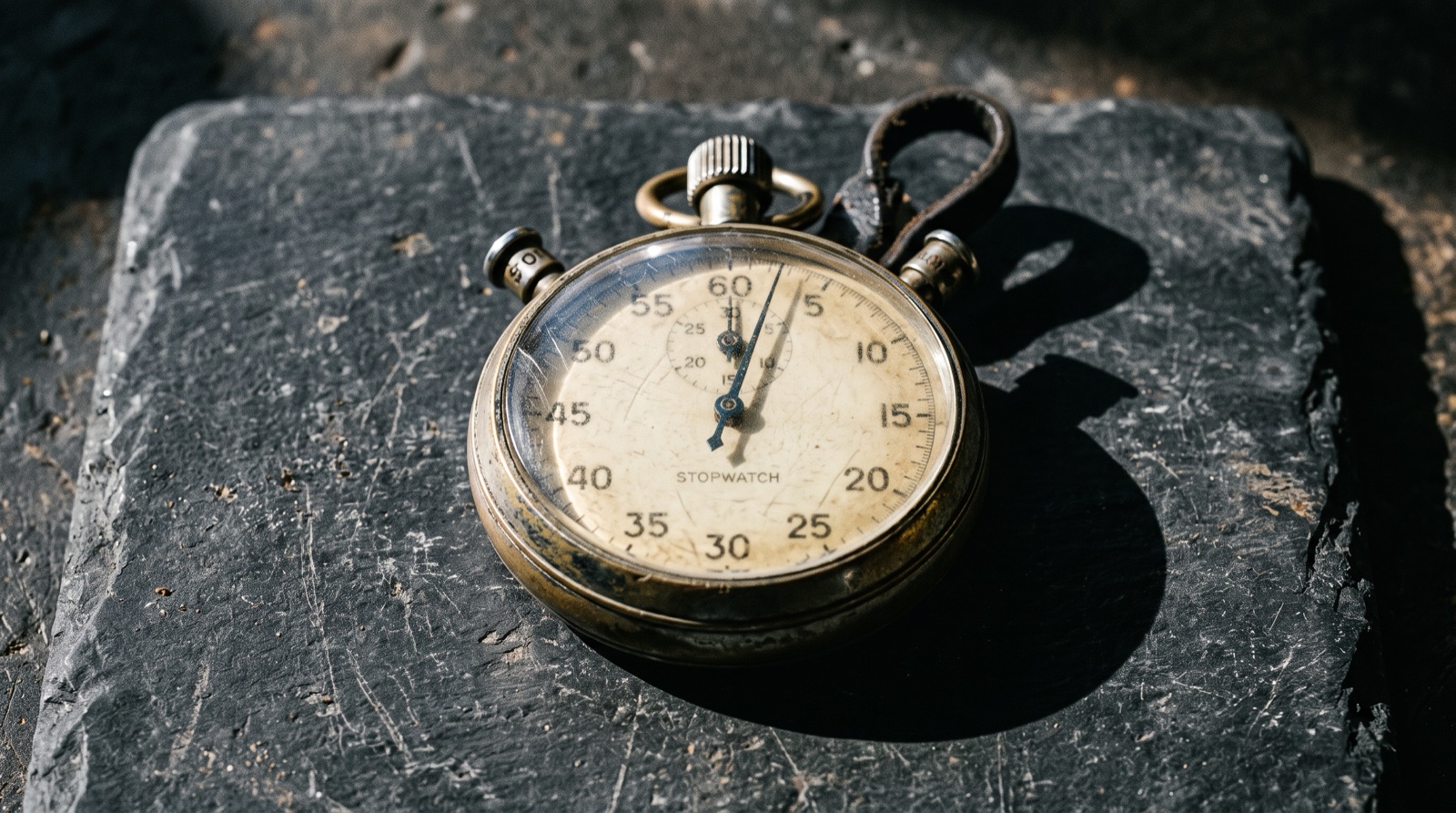
Every language test you've taken gave you time.
Time to read the question. Time to consider. Time to retrieve the word, check the ending and write it down. Even an oral exam gives you a beat to think, and the examiner waits.
That generosity is why the results have never predicted anything. Real conversation gives you no time at all.
A Binary Test With No Marks
Learning Mode does one thing. The song plays a line in your own language, then stops, and waits.
You produce the phrase or you don't.
No score, no percentage, no partial credit for getting most of it. Two outcomes, and they're separated by speed rather than accuracy: it came out without assembling, or it didn't.
A correct answer that took you four seconds is a fail. That sounds harsh until you notice it's simply an accurate description of what happens in a conversation.
What Speed Is Actually Measuring
Speed is the criterion rather than correctness because speed tells you which system produced the answer.
A phrase you retrieve consciously — find the verb, choose the form, assemble it — is being produced by the part of your brain that stores facts. That's knowledge about the language. It will always take seconds and it will always collapse under conversational pressure.
A phrase that arrives instantly, whole, with no felt effort behind it, came from somewhere else entirely: the system that runs automatic skills. That one doesn't degrade under pressure, because there's no process to interrupt.
Same phrase, same person, two completely different origins. And the only observable difference is how long it took.
Nothing to Revise For
You can't prepare for this test, which is the point.
Cramming produces conscious knowledge, and conscious knowledge is exactly what the test is designed to catch. Revising the night before makes you slower, not faster, because you'll be retrieving what you revised.
The only way through is for the phrase to have become automatic, and the only route to that is exposure over time. There's no shortcut available, so there's no reason to go looking for one.
Failing Costs Nothing
When the phrase doesn't come, nothing happens. No mark in a book. Nothing turns red. Nothing joins an overdue pile.
You relisten and try again in a day or two, and at some point it stops being difficult. You won't notice the transition when it happens — you'll simply find you've stopped waiting in the gap.
About Outputly
Learning Mode pauses each song at the recall gap for as long as you need. Instant means automatic. Hesitation means not yet. That's the whole assessment, and it's the only one that matches a conversation.